
Quaker A-Z: G is for Good Governance

What is Good Governance?

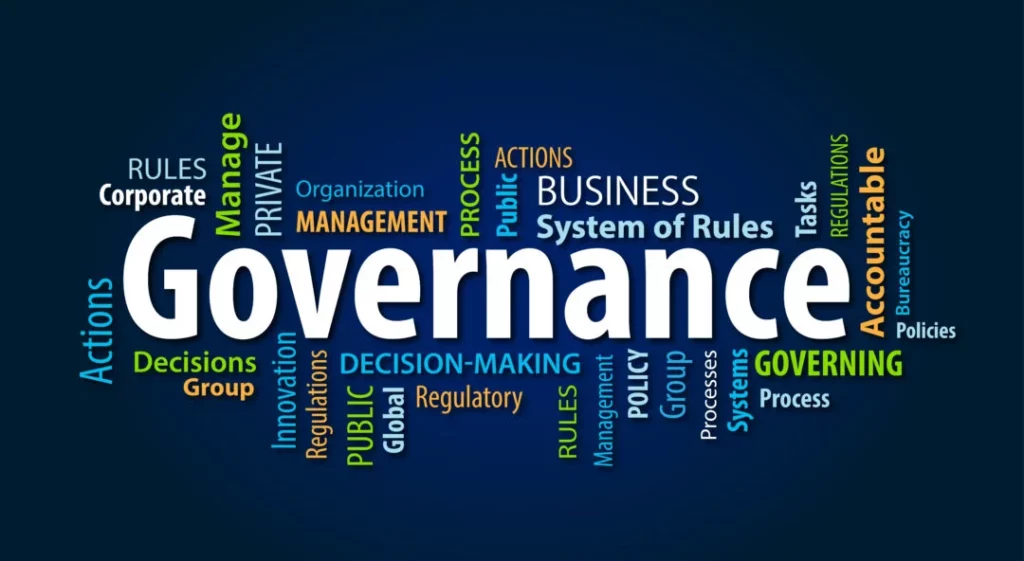
Governance is the process of decision-making and the process by which those decisions are implemented or not. Governance is used in a range of contexts from international law, the running of countries down to the most local level. In each context there will be a range of people or organisations involved with that decision – both informally and formally.

Who gets to decide if it's good?

Stephen Covey talked about a habit of mutual benefit, and said it was important to aim for a win-win scenario whenever possible.

You should have a clear set of goals or statements laid out to measure against. For a charity that will be the charitable purpose, but may also include other corporate statements or documents such as a governing document, any Memorandum of Understandings or minutes which have been adopted as corporate guidance.

These might well be referred to in a your annual report, or be found in your publications or on your  website.

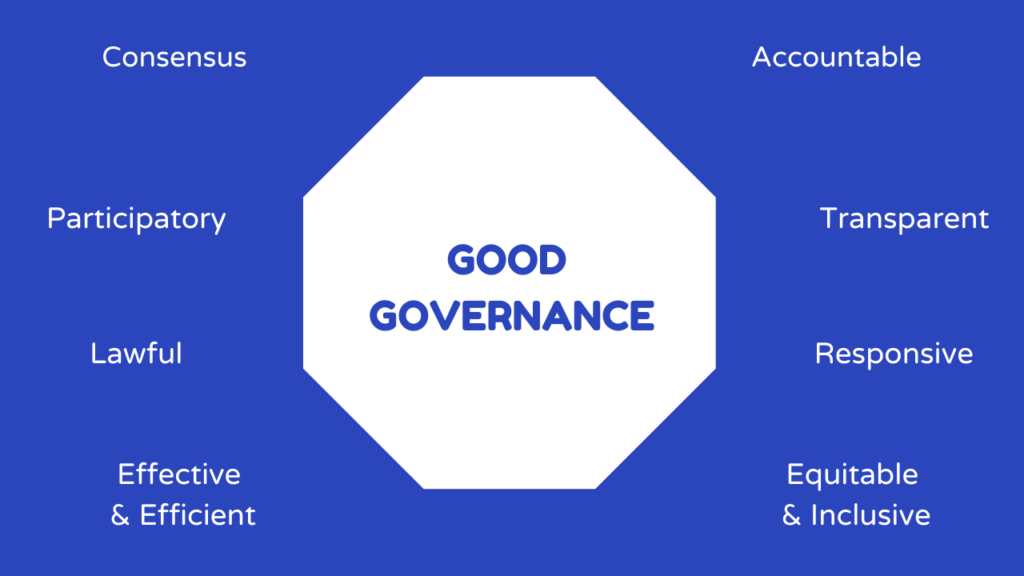
The United Nations Economic and Social Commission for Asia and the Pacific publication, ‘What is Good Governance‘ is a document I’ve recommended before, but it’s worth relinking! The diagram below is a tweaked version of theirs.

But it's slightly more complicated

If someone is questioning if you’ve made a good decision, than things will usually be complicated. Normally because there are a variety of parties involved, each with their own set of criteria and agendas.

It’s important to create and protect space for everyone to be heard, and to listen carefully to others. During Rachel Brett’s 2012 Swarthmore Lecture, ‘Snakes and Ladders‘ she commented that the trickiest part was designing menus that met everyone’s dietary and cultural requirements, and allowed easy talking during the meal. I’ve kept that in mind whenever I’m dealing with a set of parties that I’m not adding in those complications – and don’t have international diplomacy as part of the context I’m dealing with.

How to be seen to doing 'good' governance

Ensuring that everyone is kept informed and feels they’re able to contribute to the decision making process can be tricky.

You might find sharing the Trustee meeting minutes a sensible starting point for keeping people informed. If your charity has a newsletter or website then adding in brief articles about decisions and goals can be helpful.

Picture of Wendrie Heywood

Wendrie Heywood

MBS Founder

You might be interested in

Quaker A-Z: I is for Inventories, Insurances and Inclusiveness

This is part of the Quaker Alphabet Project – click here for more information. I is for Inventories, Insurances and Inclusiveness Inventories and Insurances Inventories and Insurances seem to go together – Inclusiveness perhaps less so. Insurances are of course another of those matters where I will advise that professional

Read More »
Who do you talk to? Mic image

Quaker A-Z: W is for Who Do you Talk To?

Anyone or Everyone? When I ask – Who do you talk to? – question many trustees look surprised at that question and then tell me that they talk to other trustees and members of the charity/AM. Often they tell me they don’t talk to anyone outside of the charity. But of course

Read More »

Quaker A-Z: S is for Simplicity

Simple Things Communicating with others doesn’t have to be complicated. It can be simple. You just need to decide who you want to talk to, and about what. Then work out what is required, and who can do that – remembering that you don’t have to do it all. Photo

Read More »

Further Reading

Consider joining us for our latest training workshop...

Latest Posts